Sangaku for all
What is the length of the marked segment?
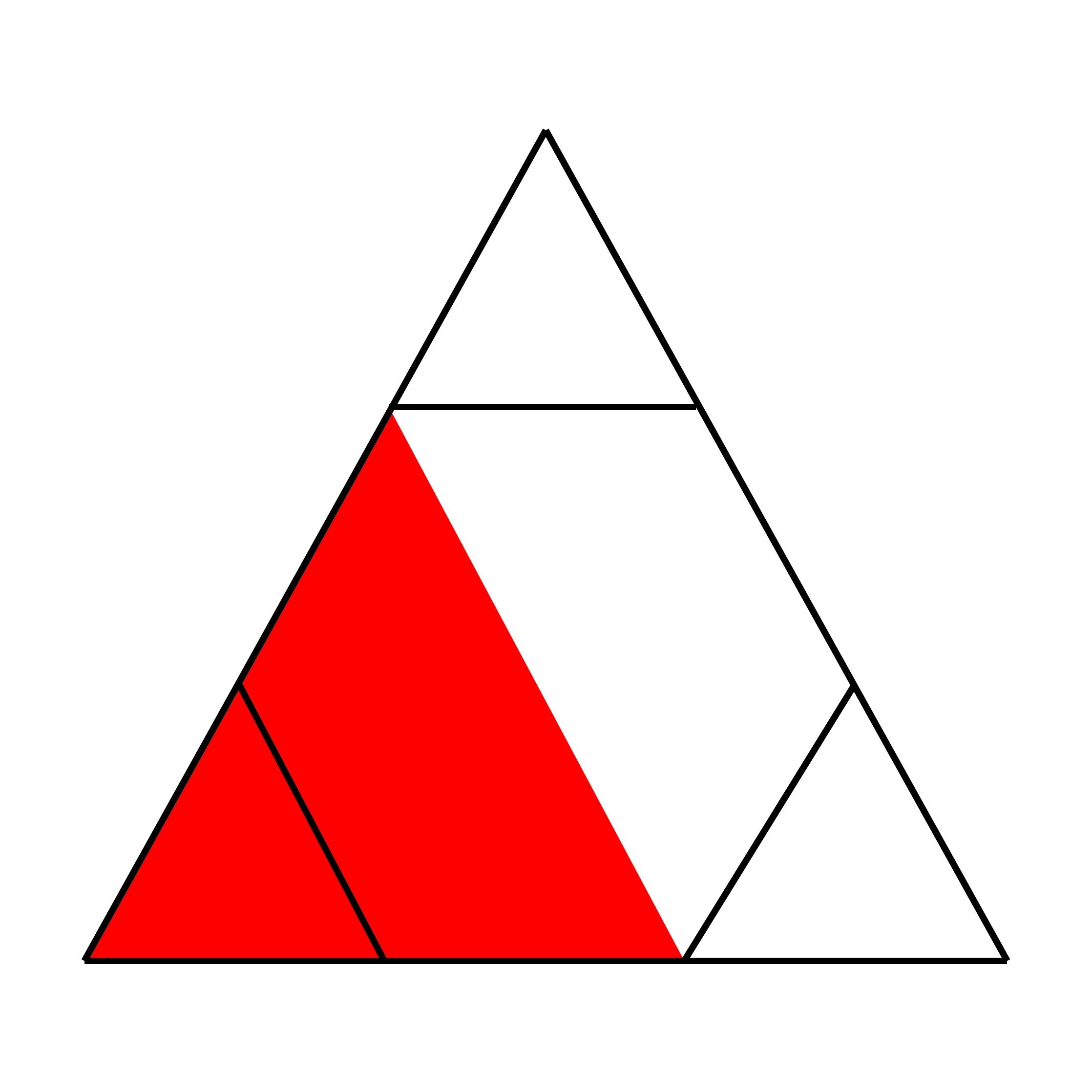
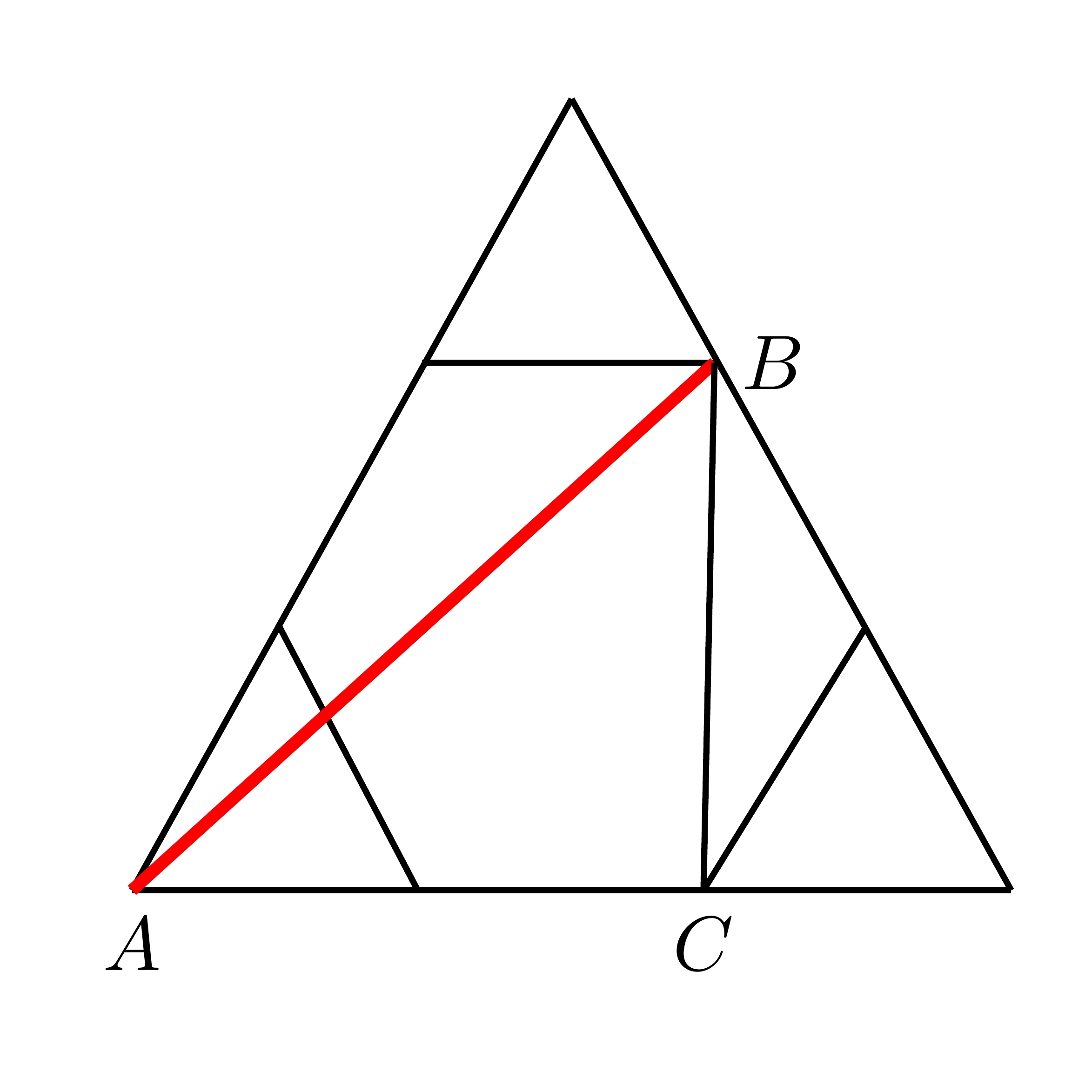
Considering the regular hexagon, the segment \(BC\) is perpendicular to to the segment \({AC}\).
The length of \(BC\) is the distance between opposite sides of a regular hexagon with side length \(\dfrac{1}{3}\).
So it is \[\sqrt{3}\cdot\dfrac{1}{3}=\dfrac{\sqrt{3}}{3}\,.\]
The length of \({AC}\) is the sum of the side length of the small equilateral triangle and the one of the regular hexagon, so it is
\[\dfrac{1}{3}+\dfrac{1}{3}=\dfrac{2}{3}\,,\]
see 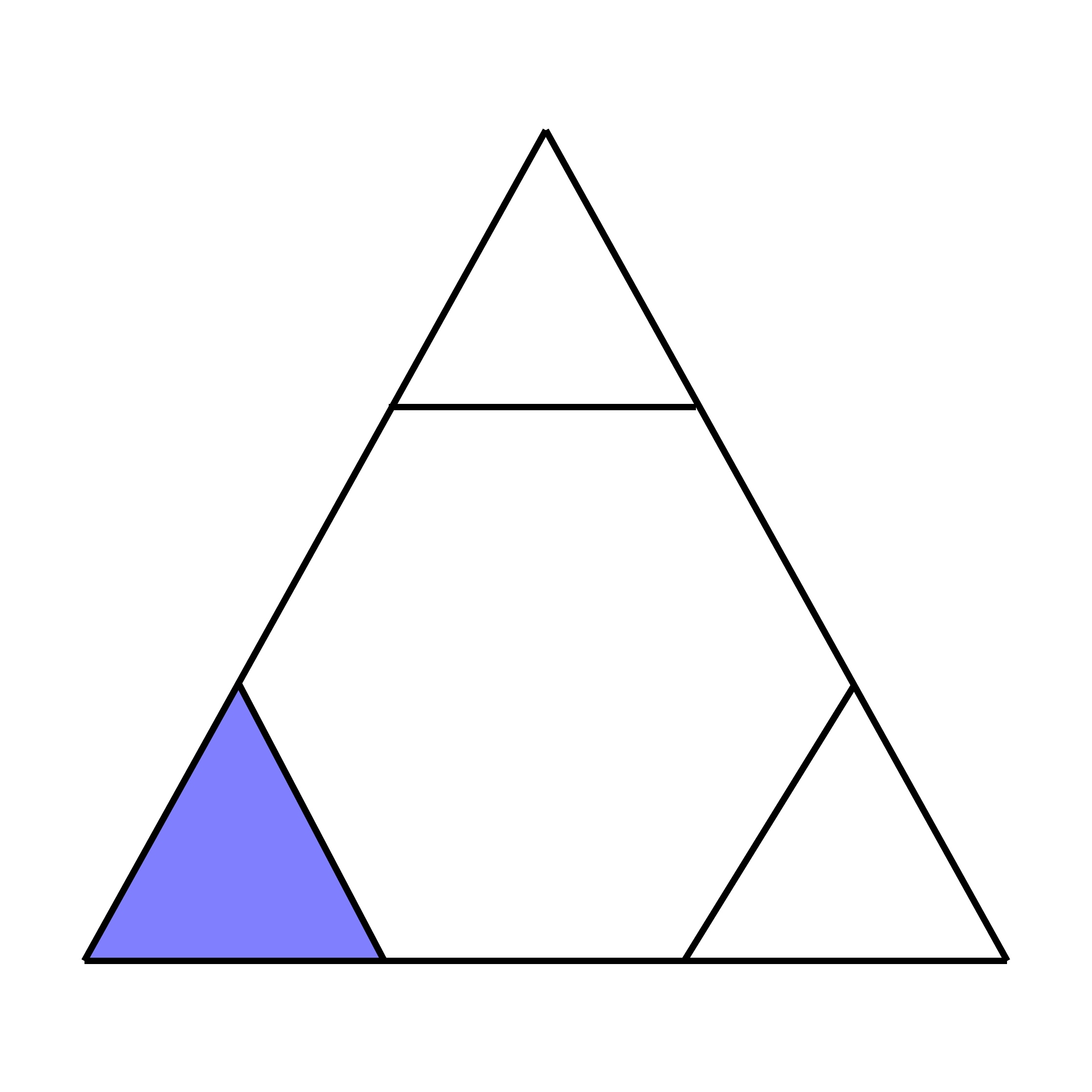 .
.
By Pythagoras's theorem in the triangle \(ABC\), the hypotenuse \(AB\) has length
\[\sqrt{\Big(\dfrac{\sqrt{3}}{3}\Big)^2+\Big(\dfrac{2}{3}\Big)^2}=\dfrac{\sqrt{7}}{3}\]
.