Properties of Cylindrical Helices
Left-handed or Right-handed?
The handedness of a helix describes the direction in its twist. A cylindrical helix can be either right-handed or left-handed.- Imagine looking at the helix along the cylinder's axis (so the base appears as a circle). If a point on the helix moves toward you while rotating counterclockwise, the helix is right-handed. If it moves away while rotating counterclockwise, it is left-handed.
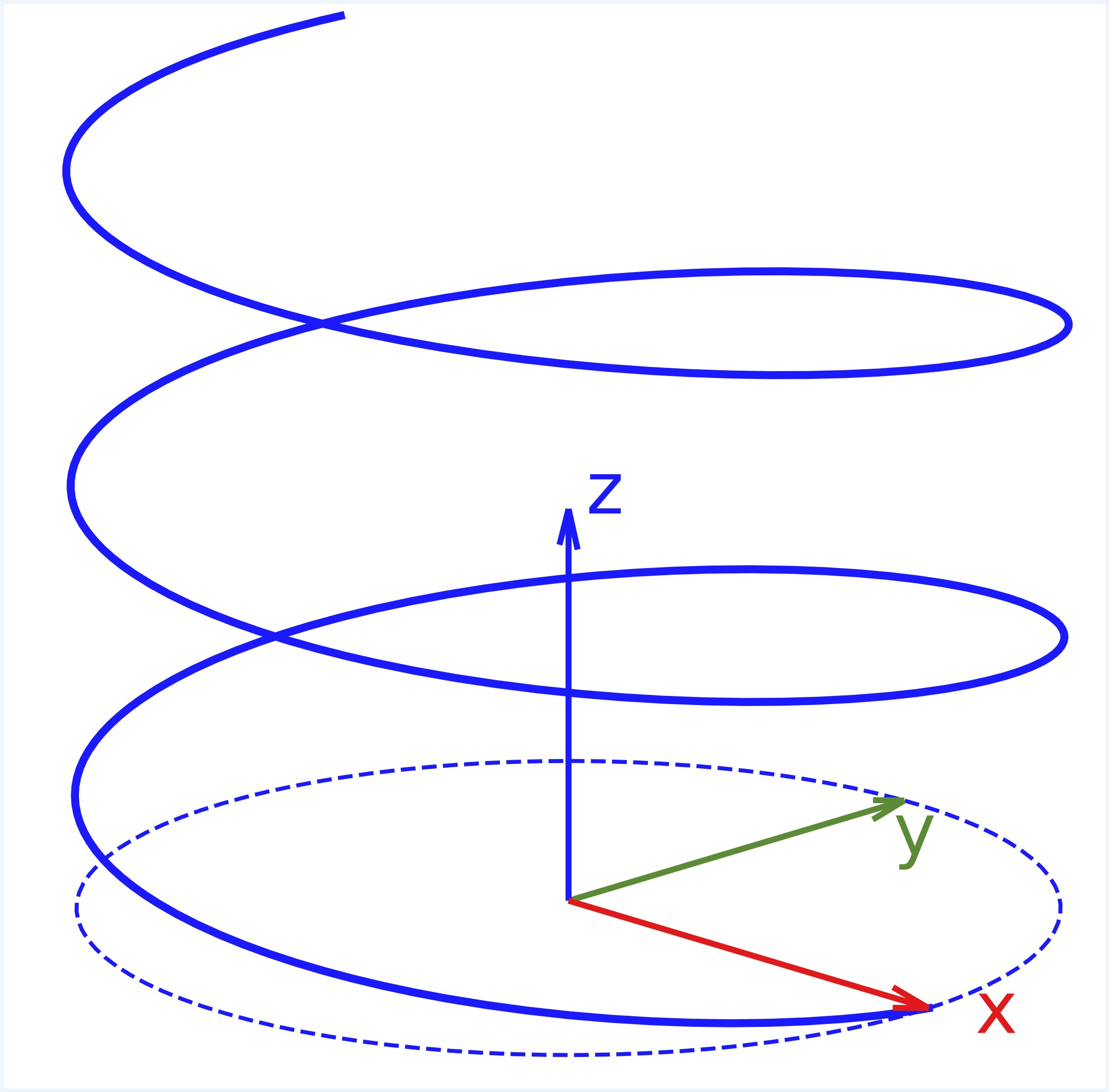
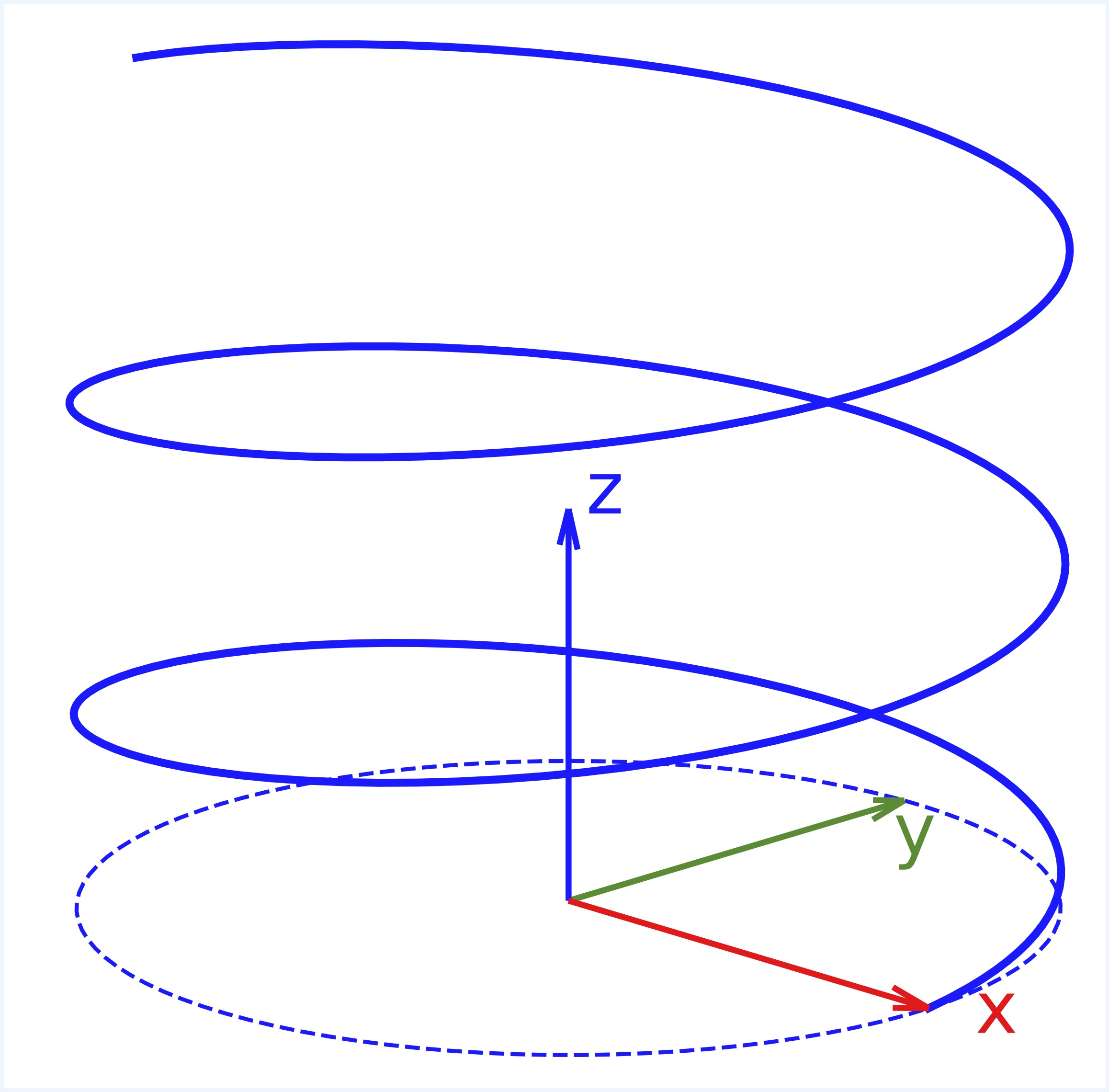
A left-handed helix and a right-handed helix respectively.
- Curl the fingers of your right hand and extend your thumb. Orient your hand so that the thumb is parallel to the cylinder's axis. If a point on the helix rotates in the direction from your palm to your fingertips and moves in the direction of your thumb, the helix is right-handed.
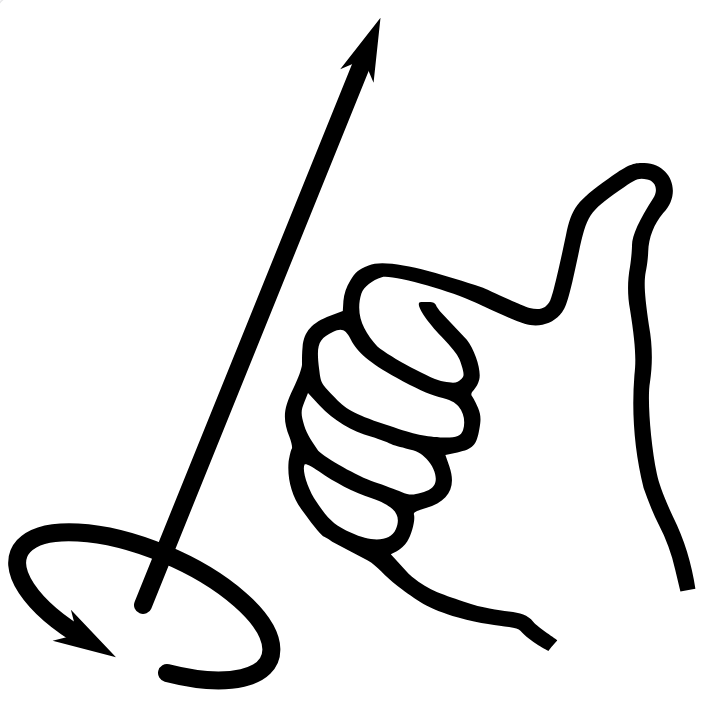
- Handedness is an intrinsic property of the helix curve, so not dependent on the observer’s perspective. In particular, rotating the helix (e.g., turning it upside down) does not change its handedness.
- If we mirror a helix, meaning we take its image under a plane reflection, the handedness is reversed.
Pitch
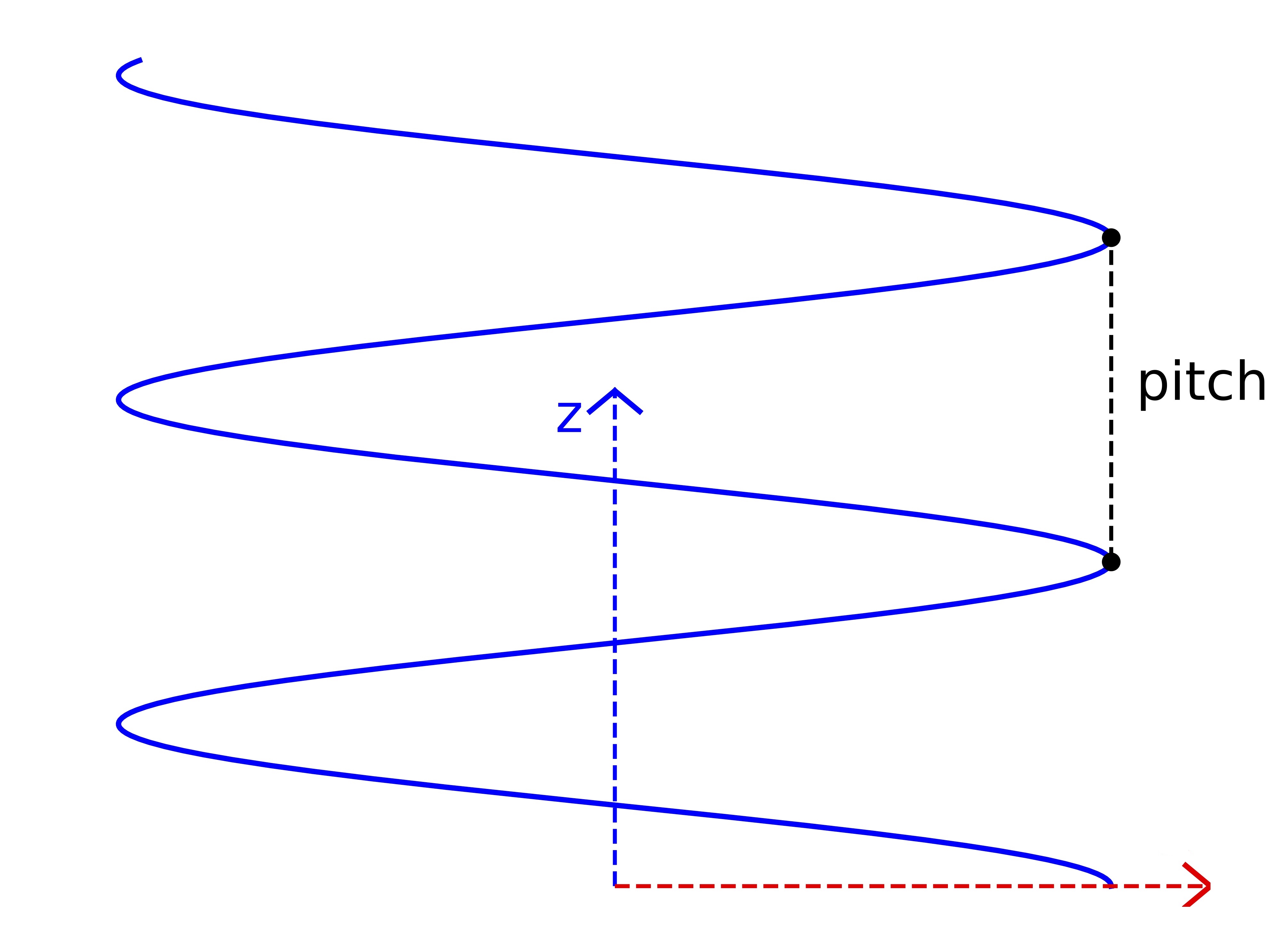
- Orient the cylinder so its axis is vertical. If the helix makes more than one turn, there will be multiple points vertically aligned with the same \(xy-\)projection.
- The pitch \(p\) of the helix is the vertical distance between two consecutive vertically aligned points. In other words, it is the distance a point travels vertically after completing one full turn.
Slope and helix angle
- The slope of a helix describes its steepness.
- Orient the cylinder vertically. The slope is the ratio of the vertical displacement to the horizontal distance travelled.
- If you consider one full turn, then the vertical displacement is the pitch, while the horizontal distance travelled is the circumference of the cylinder base.
- The helix angle is the angle between the direction of the helix and the \(xy\)-plane.
- The helix angle is closely related to the slope. In fact: the helix angle is the arctangent of the slope.
Rolling
- Take a rectangular piece of paper. You can roll it and glue two opposite edges to form a cylinder.
- If the paper has parallel lines (where each line starts at the height where the previous line ended), rolling it into a cylinder transforms these lines into a helix.
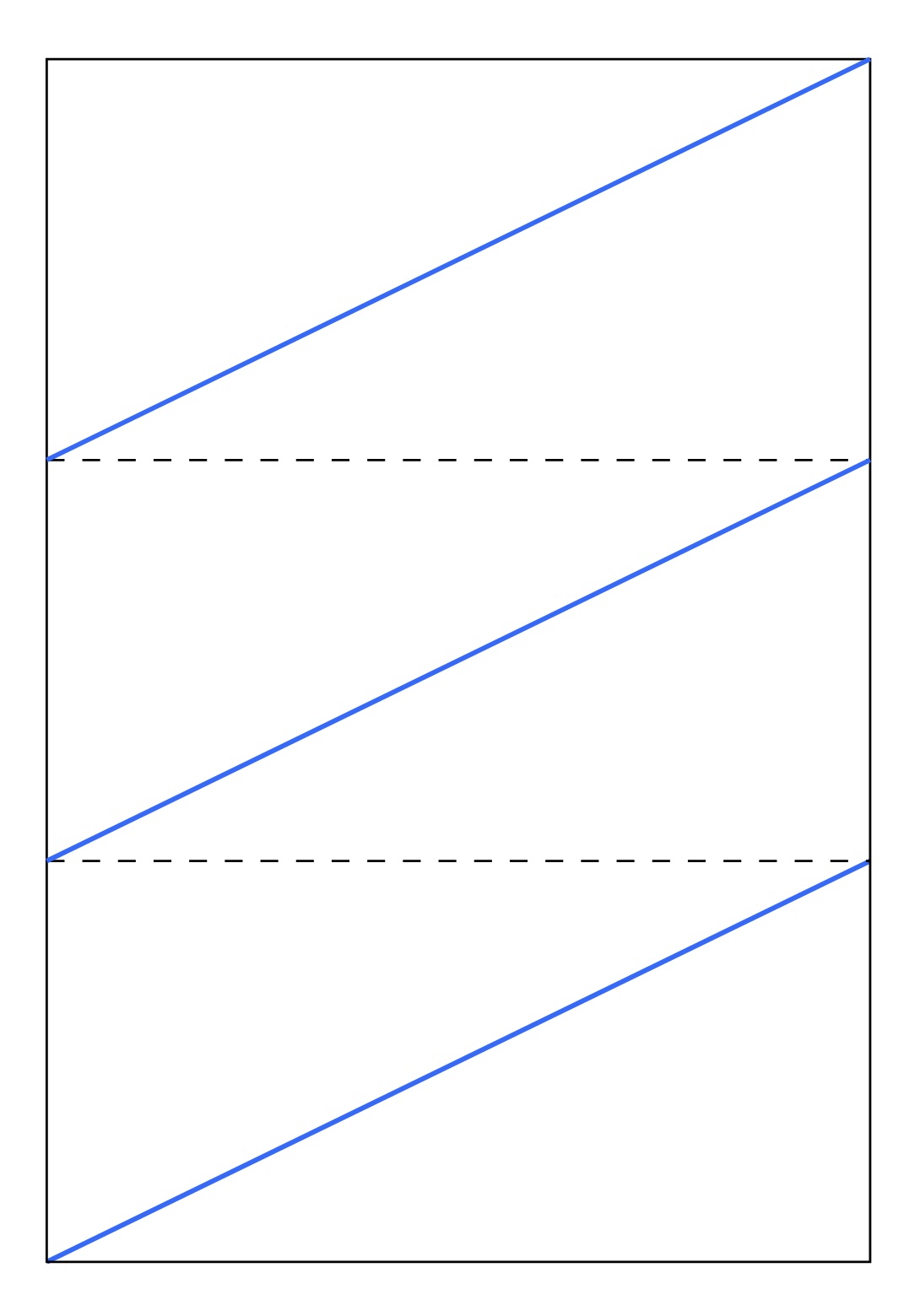
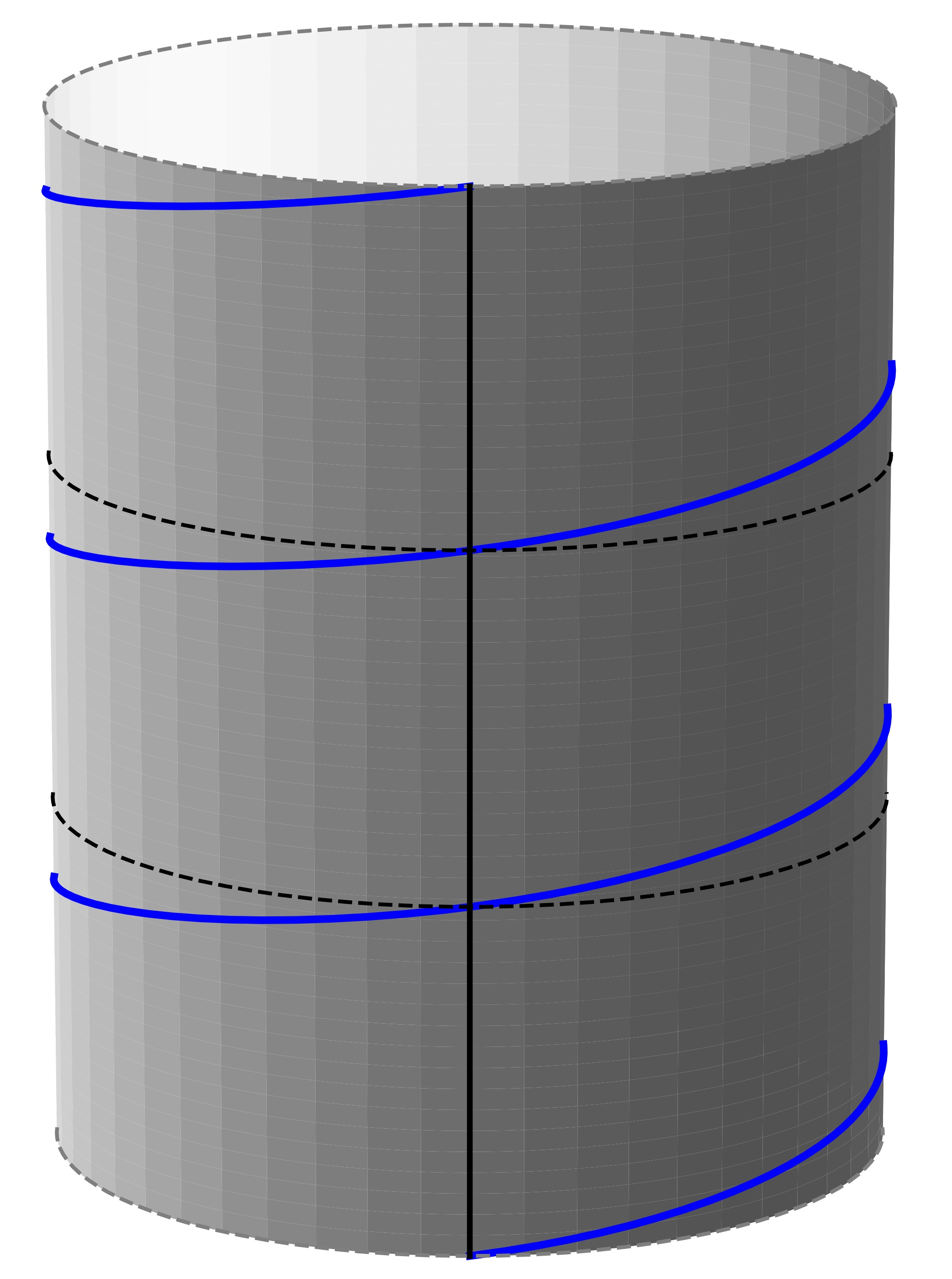
- If the parallel lines are drawn in the opposite direction (e.g., top-left to bottom-right), the resulting helix will have the opposite handedness.
- If the parallel lines are drawn more vertically, resulating the helix will have a larger pitch, steeper slope, and a larger helix angle (with the cylinder unchanged).
- To create a cylinder with a smaller radius, one can adjust the width of the paper (e.g., by cutting off a vertical strip).